The Complete Guide to Equipment Financing for Small Businesses
Everything you need to know about financing business equipment. Learn about loans, leases, qualification requirements, and Section 179 tax benefits.

The Complete Guide to Equipment Financing for Small Businesses
Equipment is the backbone of most businesses, but purchasing machinery, vehicles, or technology outright can strain cash reserves. Equipment financing helps you acquire what you need while preserving working capital.
This comprehensive guide covers everything Dallas business owners need to know about equipment financing.
What Is Equipment Financing?
We define equipment financing as a funding tool specifically designed to help you acquire physical assets without paying the full cost upfront. The equipment itself typically serves as collateral, making approval more accessible than unsecured financing.
Our team often explains to clients that this self-securing nature allows lenders to offer better rates than standard term loans. You effectively pledge the asset you are buying, which lowers the lender’s risk significantly. We also emphasize that modern equipment financing isn’t just for the hardware; it can often cover “soft costs” like shipping, installation, and even employee training.
Types of Equipment Financing
Equipment Loans You borrow money to purchase equipment. Upon paying off the loan, you own the equipment free and clear.
Equipment Leases You pay to use equipment for a set term. At the end, you can often purchase it, return it, or upgrade.
Sale-Leaseback You sell equipment you already own and lease it back, freeing up cash while continuing to use the equipment.
Equipment Loan vs. Lease: Key Differences
We find that the decision between a loan and a lease usually comes down to your cash flow goals and tax strategy. A loan builds equity immediately, while a lease often offers lower monthly payments and easier upgrades. Our clients frequently use the following comparison to decide which structure fits their current business cycle.
| Factor | Equipment Loan | Equipment Lease |
|---|---|---|
| Ownership | Immediate | At end of term (optional) |
| Monthly Payment | Higher | Lower |
| Down Payment | Usually required (10-20%) | Often minimal (1-2 payments) |
| Balance Sheet | Asset and liability | May be off-balance-sheet |
| Tax Treatment | Depreciation + interest | Potentially fully deductible |
| End of Term | Own equipment | Buy, return, or upgrade |
| Best For | Long-useful-life equipment | Rapidly evolving technology |

Types of Equipment You Can Finance
We have seen almost every type of tangible business asset qualify for financing, provided it has a resale value. Lenders in 2026 are increasingly open to financing niche assets, but they still prefer equipment that doesn’t depreciate instantly. Our experience shows that the following categories are the most commonly approved.
Heavy Equipment
- Construction machinery (Excavators, bulldozers)
- Agricultural equipment (Tractors, harvesters)
- Manufacturing machines (CNC machines, assembly lines)
- Warehouse equipment (Forklifts, racking systems)
Vehicles
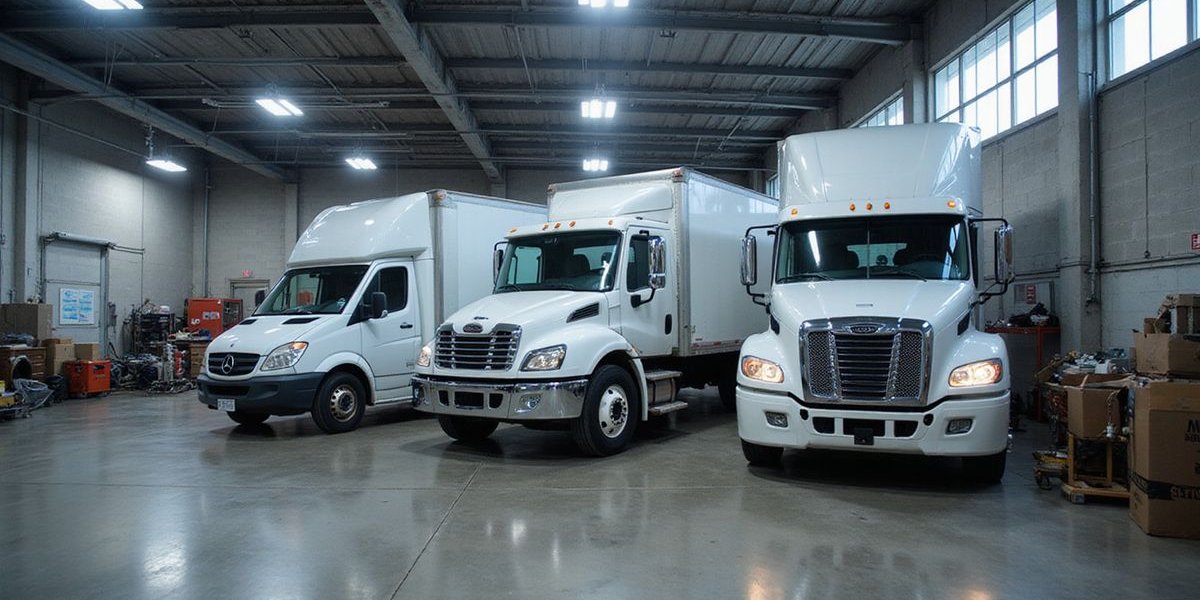
- Commercial trucks and trailers (Semi-trucks, box trucks)
- Fleet vehicles (Vans, sedans)
- Service vehicles (Tow trucks, plumbing vans)
- Specialty vehicles (Dump trucks, cement mixers)
Technology
- Computer systems and servers
- Software (Subject to specific lender limits)
- Point-of-sale systems
- Telecommunications
Medical Equipment
- Diagnostic machines (MRI, X-Ray)
- Imaging equipment
- Dental chairs
- Lab equipment
Restaurant Equipment
- Commercial ovens and cooktops
- Refrigeration systems (Walk-in coolers)
- Food prep equipment
- HVAC systems
Office Equipment
- Furniture and fixtures
- Copiers and printers
- Phone systems
How Equipment Financing Works
The Process
- Identify Equipment: Determine what you need and get vendor quotes
- Apply for Financing: Submit application with equipment details
- Approval: Lender evaluates your business and the equipment
- Documentation: Review and sign financing agreement
- Funding: Lender pays vendor directly
- Repayment: Make payments over the agreed term
- Ownership/Return: Own equipment (loan) or exercise end-of-term option (lease)
The “Application Only” Advantage
We always advise clients looking for less than $250,000 to ask about “App-Only” programs. These streamlined processes typically require just a one-page application and three months of bank statements, skipping the need for complex tax returns. Our data indicates this can cut the approval time from weeks to just 24-48 hours.
What Lenders Evaluate
- Your business: Time in operation, revenue, credit history
- The equipment: Type, useful life, resale value
- The vendor: Reputation and reliability
- Your use case: How the equipment supports your business
Qualification Requirements
We have observed that equipment financing remains the easiest capital product to qualify for, with approval rates hovering around 73% in recent Federal Reserve surveys. Because the lender can repossess the asset if you default, they are less fixated on your personal credit score than they would be for an unsecured line of credit. Our guidance is to view these requirements as a baseline rather than a hard rule.
Typical Requirements
| Factor | Minimum | Preferred |
|---|---|---|
| Time in Business | 6 months | 2+ years |
| Personal Credit | 600+ | 680+ |
| Annual Revenue | $100K+ | $250K+ |
| Down Payment | 0-20% | 10%+ helps |
What Helps Approval
- Strong cash flow
- Industry experience
- Reasonable equipment request (not over-leveraged)
- Good vendor relationship
- Previous equipment financing history

Understanding Equipment Financing Costs
Interest Rates and Factors
We see interest rates for equipment financing fluctuate based on the prime rate and your risk profile. In the current 2026 market, rates have stabilized but remain slightly higher than pre-2022 levels. Our team tracks these averages to help you benchmark your offers.
Typical Rate Ranges (2026 Estimates):
- Excellent credit: 6-10%
- Good credit: 10-14%
- Fair credit: 14-20%
- Challenged credit: 20-30%+
Total Cost Considerations
Beyond interest, consider:
- Down payment: Reduces financed amount but requires upfront cash
- Fees: Origination, documentation, or closing fees
- Maintenance: Your responsibility during financing
- Insurance: Often required on financed equipment
Section 179 Tax Benefits
We consider Section 179 one of the most powerful wealth-building tools available to small business owners. Recent legislative updates, including the “One Big Beautiful Bill Act” passed in July 2025, have significantly expanded these limits for the 2025 and 2026 tax years. Our clients use this deduction to wipe out their tax liability by buying equipment they needed anyway.
What Is Section 179?
Section 179 allows businesses to deduct the full purchase price of qualifying equipment in the year it’s purchased or financed, rather than depreciating it over several years.
How It Works
Example:
- Equipment Purchase: $100,000
- Tax Bracket: 25%
- Section 179 Deduction: $100,000
- Tax Savings: $25,000
You save $25,000 in taxes while potentially paying only a fraction of the equipment cost in the first year.
2026 Eligibility & Limits
We want to highlight that the deduction limit has increased to $2.5 million for 2026. This cap begins to phase out only after your total equipment purchases exceed $4 million. Our analysis confirms that 100% Bonus Depreciation has also been restored, allowing you to deduct the full cost of eligible property even after hitting the Section 179 cap.
Important: Consult your tax advisor for specific guidance on your situation.
New vs. Used Equipment Financing
New Equipment
Pros:
- Warranties included
- Latest technology
- Lower maintenance initially
- Easier financing
Cons:
- Higher cost
- Depreciation hits hardest
- May be overkill for needs
Used Equipment
Pros:
- Lower cost
- Depreciation already absorbed
- Can be better value
Cons:
- May need repairs sooner
- Shorter remaining useful life
- Financing may be harder to obtain
- Limited or no warranty
We frequently remind business owners that Section 179 tax deductions apply to used equipment just as they do to new equipment. However, be aware of the “10-Year Rule” many lenders enforce, which restricts financing on machinery or vehicles manufactured more than a decade ago. Our advice is to verify the age of any used asset before committing to a purchase.
Choosing the Right Option
Choose Equipment Loan If:
- You want to own the equipment
- The equipment has a long useful life
- You want to build equity
- You can handle higher monthly payments
Choose Equipment Lease If:
- You prefer lower monthly payments
- The equipment may become obsolete
- You want flexibility at end of term
- You don’t want equipment on your balance sheet
Choose Working Capital Loan If:
- You’re buying from multiple vendors
- Equipment cost is relatively low
- You need funds for more than just equipment
- Traditional equipment financing is unavailable

Tips for Getting the Best Deal
Compare Multiple Offers
We strongly suggest getting at least three quotes before signing any paperwork. Different lenders have different appetites for specific industries; one might love construction while another prefers medical. Our team sees spreads of up to 5% in interest rates for the exact same borrower profile.
- Banks and credit unions
- Equipment finance companies
- Manufacturer financing
- Alternative lenders
Negotiate Terms
Everything is negotiable:
- Interest rate/factor
- Down payment requirement
- Term length
- Fees
- End-of-lease options
Consider Total Cost of Ownership
Beyond financing, factor in:
- Insurance
- Maintenance
- Training
- Installation
- Disposal/trade-in
Time Your Purchase
- End of quarter/year: Vendors may offer deals
- Tax year considerations: Section 179 timing
- Interest rate environment: Lock favorable rates
The Bottom Line
Equipment financing enables Dallas businesses to acquire essential machinery, vehicles, and technology while preserving cash flow. Whether through loans or leases, the key is matching the financing structure to your equipment’s useful life and your business needs.
With Section 179 tax benefits, equipment financing can be even more advantageous—potentially saving significant taxes while building your business’s capabilities.
Ready to finance equipment for your business? Contact Equipment Financing Dallas Pros to explore your options.