How Merchant Cash Advance Repayment Works: Daily, Weekly & Holdback
Understand MCA repayment structures including daily remittance and holdback percentages. Learn how payments adjust with your sales volume.

Understanding how merchant cash advance repayment works is the difference between fueling your growth and suffocating your daily cash flow. We see too many business owners focus solely on the total funding amount while overlooking the daily mechanics that actually impact their bank accounts.
Unlike traditional loans with predictable monthly checks, Merchant Cash Advances (MCAs) move at the speed of your revenue. This guide explains the repayment mechanics so you can budget effectively and avoid surprises.
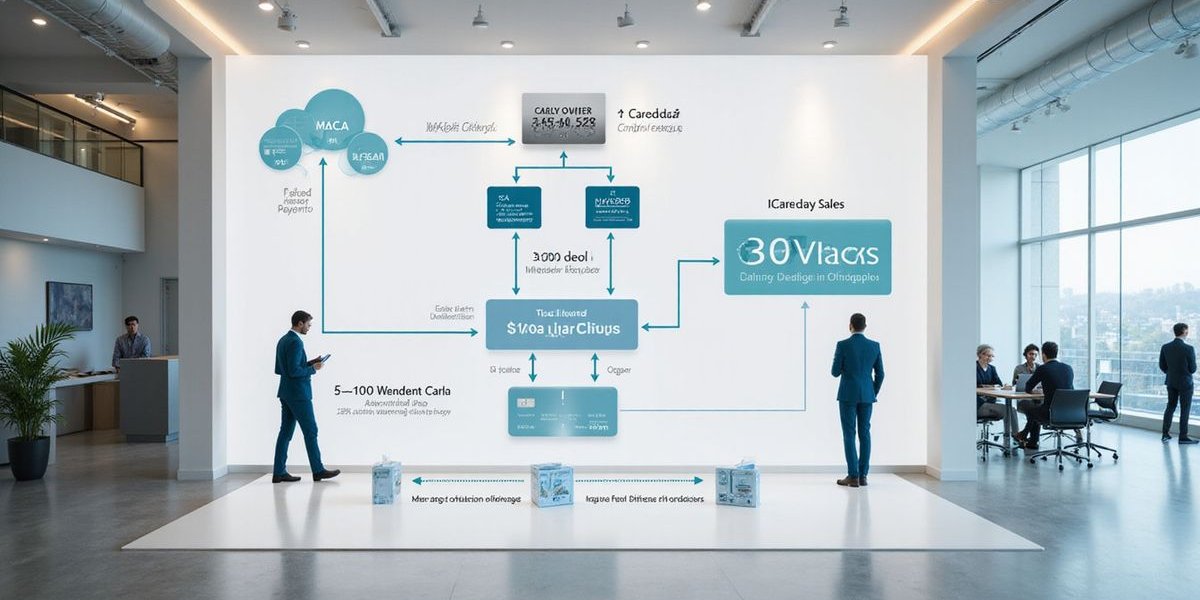
The Basics of MCA Repayment
How It Works
We often explain this process as “buying future sales” rather than borrowing money. The funder purchases a portion of your future revenue at a discount, and you deliver that revenue as it comes in.
Here is the standard lifecycle of the transaction:
- Lump Sum Injection: You receive capital upfront (e.g., $50,000).
- Daily Remittance: A specific percentage of your card sales is automatically sent to the funder.
- Variable Term: This continues until the agreed-upon total is paid.
- Completion: The timeline effectively adjusts based on how busy or slow your business is.
Key Terms You Need to Know
Advance Amount: The actual cash that hits your business bank account.
Factor Rate: This is the multiplier used to determine what you owe. In the current 2025-2026 market, we typically see rates ranging from 1.10 to 1.50 depending on risk.
Total Payback: The Advance Amount × Factor Rate. (e.g., $50,000 × 1.3 = $65,000).
Holdback Rate: The percentage of your daily credit card batches that the funder keeps.
Retrieval Rate: This is simply industry jargon for the holdback rate.
Understanding Holdback Rates
The holdback rate acts as the throttle for your repayment speed. We advise clients to pay close attention here, as this percentage determines how much operating cash stays in your account each morning.
Typical Holdback Ranges
High holdbacks can clear debt quickly, but they also tighten your operational belt.
| Risk Level | Holdback Rate | Cash Flow Impact |
|---|---|---|
| Lower Risk | 10-12% | Slower repayment but keeps more cash in your register. |
| Average | 12-15% | A balanced approach common for restaurants and retail. |
| Higher Risk | 15-20% | Faster repayment that requires strict budgeting. |
| Very High | 20-25% | Rapid repayment that can cause significant cash drain. |
Example Calculation
Let’s look at the math for a standard Dallas-area retail shop.
Your MCA Terms:
- Advance: $50,000
- Factor Rate: 1.25
- Total Payback: $62,500
- Holdback Rate: 15%
On a $2,000 Sales Day:
- Holdback: $2,000 × 15% = $300 sent to funder.
- You Keep: $1,700 for operations.
On a $500 Sales Day:
- Holdback: $500 × 15% = $75 sent to funder.
- You Keep: $425 for operations.
This variability is the primary safety valve of an MCA. If you earn zero dollars on a Sunday, you generally remit zero dollars.

Repayment Methods
Split Withholding (Most Common)
We find this to be the preferred method for businesses with high credit card volume because it is “set and forget.” Your payment processor automatically splits your daily settlements before they even touch your bank account.
The Process:
- A customer pays with a credit card.
- The transaction settles the next business day.
- The processor splits the funds automatically.
- You receive your 85% (or agreed portion); the funder receives their 15%.
Pros:
- Zero Effort: No manual transfers required.
- Safety: You never accidentally spend the repayment funds.
- Accuracy: Matches your sales volume exactly.
Cons:
- Compatibility: You must use a processor that supports split funding (like First Data or TSYS).
- Switching Costs: You cannot switch processors without the funder’s permission.
- Fees: Some processors charge a small monthly fee for this “split” service.
ACH Debits (Lock-Box or Daily Fixed)
Some funders prefer to debit your business bank account directly. We usually see this structure when a business has high cash receipts or uses a Point of Sale system like Square or PayPal that is harder to split externally.
The Process:
- The funder estimates your daily sales based on historical averages.
- An ACH debit pulls that fixed or estimated amount every business day.
- A “true-up” (reconciliation) happens periodically to adjust for actual sales volume.
Pros:
- Flexibility: Works with any credit card processor.
- Predictability: You know exactly what time the money leaves the account.
Cons:
- Overdraft Risk: The debit hits even if you had a slow sales day.
- Reconciliation: You must request “true-ups” manually if sales drop significantly.
- Lag Time: Debits might batch over weekends, resulting in a large Monday withdrawal.
Weekly or Monthly Settlements
While rare for high-risk advances, we occasionally secure these terms for established businesses with strong credit profiles.
The Process:
- Sales are tracked digitally throughout the period.
- One single withdrawal occurs at the end of the week or month.
Pros:
- Simplified Accounting: Fewer transactions to book in QuickBooks.
- Cash Management: Easier to manage float for a few days.
Cons:
- Lump Sum Shock: The payment amount is significantly larger.
- Discipline Required: You must not spend the accrued funds before the withdrawal date.
Factors Affecting Repayment Timeline
Since MCA repayment depends on sales, your maturity date is an estimate, not a guarantee. We emphasize that this timeline is fluid.
Faster Repayment Scenarios
Your balance will clear sooner if:
- Seasonal Peaks: A florist will pay down huge chunks of an advance in February and May.
- Marketing Wins: A successful ad campaign doubles your daily volume.
- Expansion: Opening a second location increases total revenue flow.
Slower Repayment Scenarios
The term extends naturally if:
- Economic Downturns: General market slumps reduce daily swipes.
- Renovations: Closing for a few days means zero payments for those days.
- Supply Chain Issues: Lack of inventory leads to lower sales volume.
Estimating Your Timeline
You can project your payoff date using this simple formula.
Formula:
Estimated Days = Total Payback ÷ (Average Daily Sales × Holdback Rate)
Practical Example:
- Total Payback: $62,500
- Average Daily Sales: $2,000
- Holdback Rate: 15% ($300/day)
The Math: $62,500 ÷ $300 = 208 days (approximately 7 months).
If your sales jump to $3,000/day, your daily remittance becomes $450. You would then finish in roughly 139 days (4.5 months).

Managing Cash Flow During Repayment
Plan for the Holdback
Treat the holdback percentage as “Cost of Goods Sold” rather than a loan payment. We advise clients to mentally deduct that 15% immediately so they never rely on it for rent or payroll.
Example Budget:
- Daily Card Sales: $2,500
- Holdback (15%): -$375
- Real Cash Available: $2,125
You must build your operational budget on the $2,125 figure, not the $2,500.
Maintain Reserves
Business owners should keep a “low sales” buffer. If you are on a fixed ACH daily payment plan, this buffer is critical to prevent overdrafts on slow days before a reconciliation occurs.
Time Major Expenses
Schedule large outflows like rent or inventory purchases for dates following your strongest sales days (e.g., Monday or Tuesday for a busy weekend restaurant).
Monitor Daily
Log into your funder’s portal at least weekly. We recommend tracking your remaining balance to verify that your payments are being applied correctly.
What Happens If Sales Drop?
This is where the structure of a Merchant Cash Advance proves its value.
Automatic Adjustment
If you use split withholding, the adjustment is instant. A $500 sales day means a $75 payment, protecting your ability to buy inventory for tomorrow.
Extended Timeline
There is no “late fee” for a slow month. The advance simply takes longer to pay off.
No Penalty
Unlike a term loan where missing a payment date damages your credit, a lower payment due to lower sales is fully compliant with the contract.
Communication
If you face a long-term shutdown (like a remodel), contact your funder immediately. We have seen funders pause daily ACH debits when proactive communication happens before the bank account goes negative.
Common Questions About Repayment
Can I pay off early? You can pay the remaining balance at any time, but typically you must pay the full repayment amount. Most MCA contracts do not offer interest savings for early payment because it is a purchase of future receivables, not an interest-bearing loan.
Some funders may offer a small discount (e.g., waiving 10% of the remaining fees) if you pay off very early.
What if I change processors? You are contractually obligated to inform your funder before switching. Switching processors without notice breaks the “split” connection and is considered a breach of contract (default).
What about cash sales? Standard split-withholding MCAs only deduct from credit card sales. Cash sales usually stay 100% in your pocket, which can help with liquidity.
However, be aware that “Total Revenue” advances exist which require you to deposit cash and allow the funder to debit based on all income sources.
What if I close my business? A permanent business closure typically triggers a settlement clause. While personal guarantees are rarer in MCAs than bank loans, most contracts have “bad boy” clauses that trigger personal liability if you intentionally close the business or divert funds to avoid repayment.
Can the holdback rate change? Your rate is fixed in the initial contract. The only time this changes is if you refinance the advance (add more money) or restructure the deal due to hardship.
Red Flags to Watch
Excessively High Holdback
We caution against holdback rates exceeding 20% unless your margins are incredibly high. Losing a quarter of every sale off the top can strangle a business that operates on thin margins.
Confusing Agreements
Transparency is non-negotiable. If a funder cannot explain the difference between the “Purchase Amount” and “Repayment Amount” clearly, walk away.
Hidden Fees
Review the contract for “Admin Fees,” “Origination Fees,” or “ACH Reject Fees.” A $500 origination fee on a small advance significantly increases your effective cost.
Prepayment Restrictions
Some contracts mandate a minimum term (e.g., “Minimum 6 months interest”). This means even if you win the lottery and pay it off in week two, you still owe the full 6-month cost.

The Bottom Line
MCA repayment through daily holdbacks offers unique flexibility because your payments automatically adjust with your sales volume. This mechanism protects your cash flow during slow periods but requires you to be comfortable with variable timelines.
Success comes down to understanding your holdback rate, forecasting your net daily cash, and choosing a reputable partner.
Ready to explore funding with transparent terms? Contact Equipment Financing Dallas Pros today. We provide clear, straightforward guidance to help Dallas businesses grow without the guesswork.